Warsaw
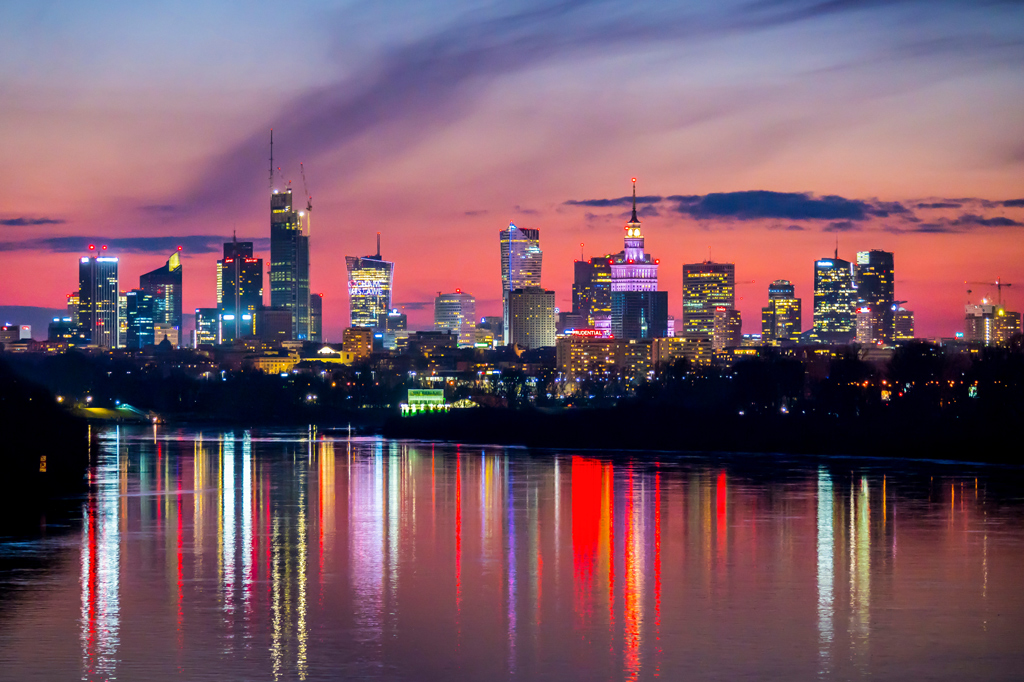
The capital of both the Mazovia province and of Poland itself, this is a truly extraordinary city. Situated right in the heart of Europe, at the intersection of Europe’s east-west and north-south transport routes, Warsaw is major economic, academic, cultural and tourist hub with a dazzling array of historical sites and tourist attractions that captivates everyone who visits.
Old Town
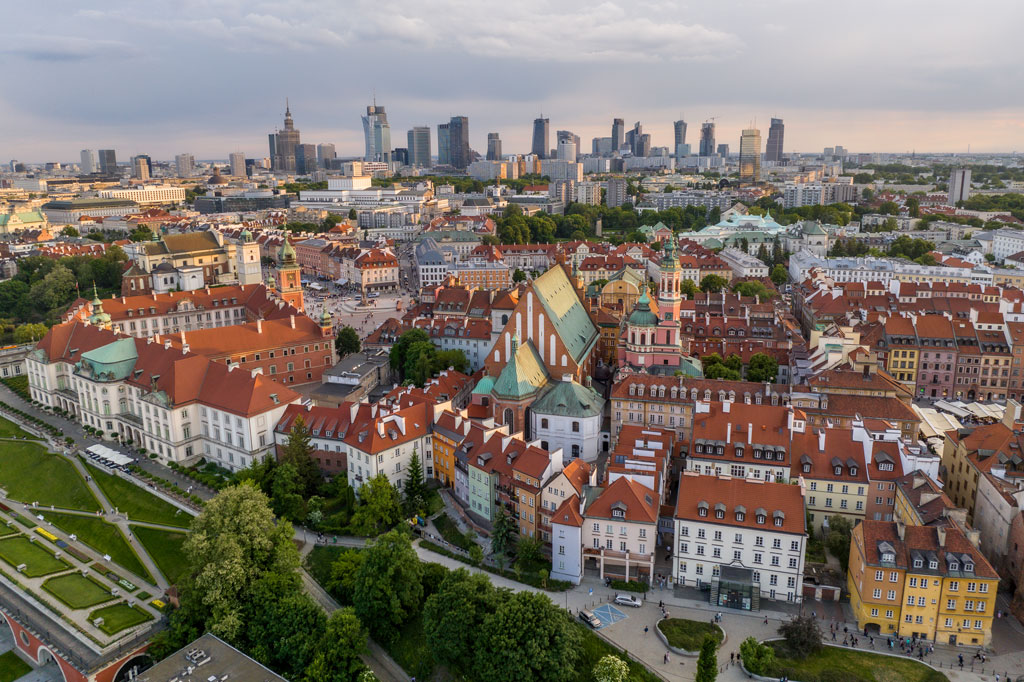
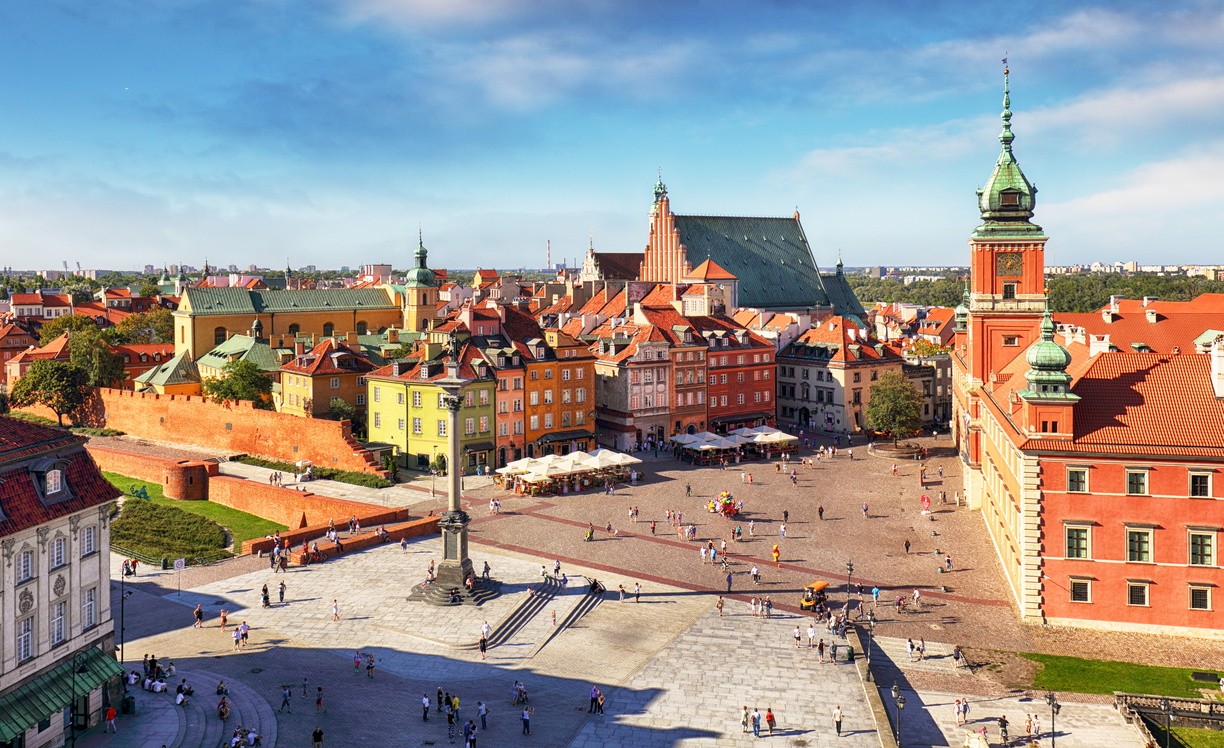
There’s no better place to start your tour of Warsaw than the spectacular Old Town, whose history goes back 700 years. And it will feel as though the buildings are ancient as well, even though the truth, however mind boggling it is to comprehend, is that this incredible part of Warsaw was reconstructed after it was completely destroyed during World War II on – wait for it – the basis of paintings by Canaletto. It was recreated with such attention to detail that it is rightly listed as a UNESCO World Heritage Site. Today, the Old Town is a beguiling, charmingly cosy area with a unique atmosphere and original architectural details, which becomes especially enchanting after nightfall. The Old Town Square is its lifeblood, packed in summer with outdoor cafés and people strolling around, making it one of capital’s most popular spots. A statue of the Warsaw Mermaid, the city’s symbol, stands proudly in the centre. It may well be the only mermaid wielding a sword and shield you’ll ever see. Eleven tenement buildings around the Square are occupied by the Museum of Warsaw, where collections of historical artefacts tell the incredible story of the city and its residents. Another historical treasure trove is found in the nearby Gothic St. John’s Cathedral, with tombs of the last Dukes of Mazovia, plaques in memory of Polish patriots and statesmen, and the Chapel of Cardinal Stefan Wyszyński, often referred to as “Primate of the Millennium”.
Royal Castle
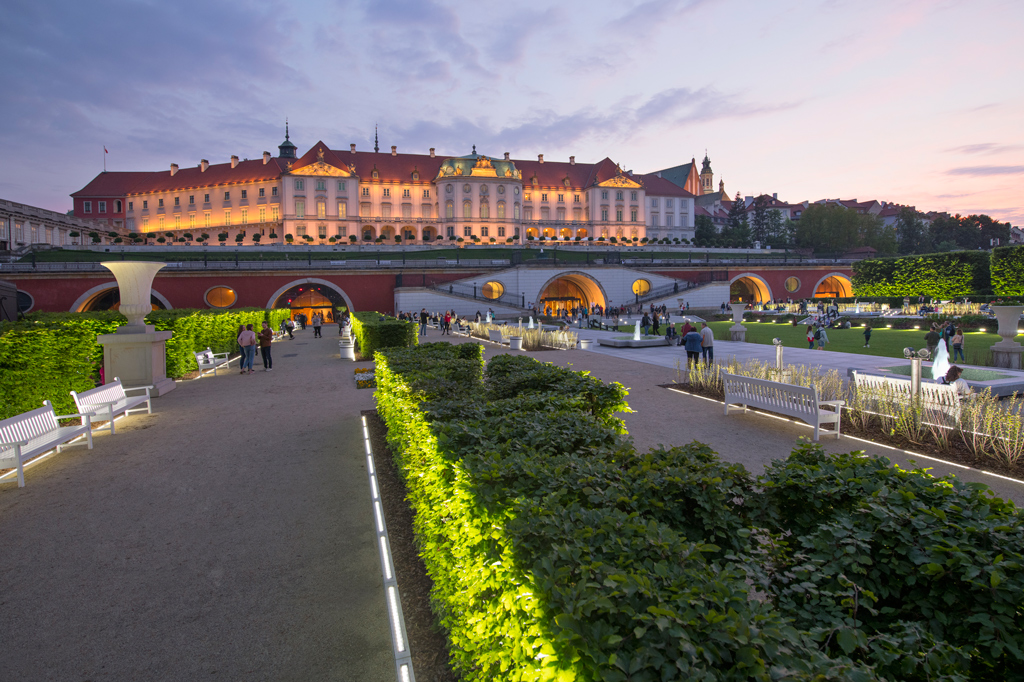
The Royal Castle in Warsaw (Polish: Zamek Królewski w Warszawie) is a castle residency that formerly served throughout the centuries as the official residence of the Polish monarchs. Initially the complex served as the residence of the Dukes of Masovia, and since the sixteenth century, the seat of the Polish–Lithuanian Commonwealth: the King and Parliament. In its long history the Royal Castle was repeatedly plundered and devastated by the invading Swedish, Brandenburgian, Prussian and Tsarist armies. Burned and looted by the Nazi Germans following the Invasion of Poland in 1939 and almost completely destroyed in 1944 after the failed Warsaw Uprising, the Castle was completely rebuilt and reconstructed. Reconstruction of the castle carried out in 1971–1984 was led by the Civic Committee, responsible for the reconstruction of Warsaw. In 1980, the Royal Castle, together with the Old Town was registered as a protected UNESCO World Heritage Site.
Palace of Culture and Science
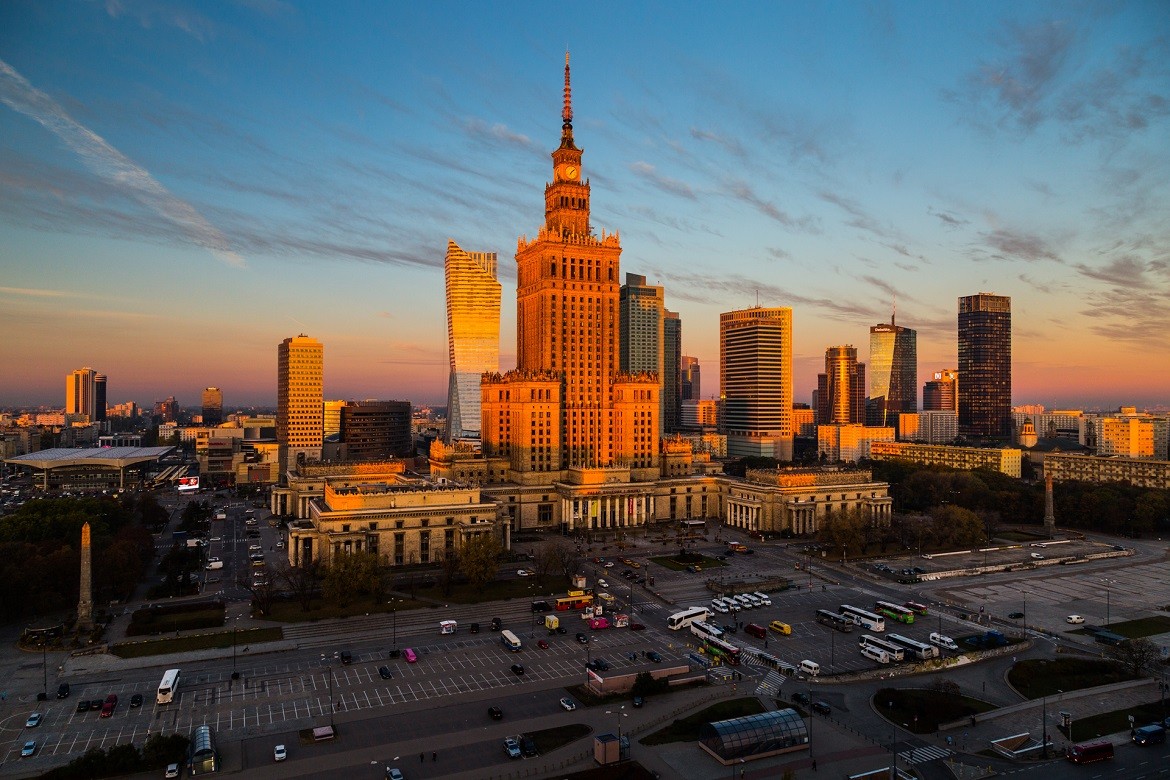
One of the highest and most recognisable building in Warsaw can be seen from almost every part of the capital. Where did it come from? It was opened in 1955 on the initiative of Joseph Stalin as a “gift of the Soviet people for the Poles”. Built by Russian workers, for a long time, it was considered to be a symbol of socialist power and the pride of People’s Poland – it was where conventions of the Polish United Workers’ Party took place. Since its very beginning, its monumental interiors have hosted numerous concerts, exhibitions, fairs and shows. Currently, the palace is home to theatres, a cinema, museums, trendy pubs and the main Warsaw Tourist Information office.
Warsaw Gallery


Disclaimer!
This Website was produced with the purpose of assessment for Computing Course Web
Authoring Module of Arden University.
It is a non-commercial student project.
All content and images are
used for educational demonstration only.
© 2025 STU207511. All rights reserved.
Contact
information:
stu207511@ardenuniversity.ac.uk